Turning Farm Waste into Energy, Organic Fertilizer & Rural Prosperity
A Sustainable Village Enterprise Initiative by LIKITH FARM SHIELD™
Introduction: A New Opportunity for Rural India
India’s villages possess enormous natural resources in the form of cattle dung, agricultural residues, crop stalks, straw and other biodegradable materials. However, a significant portion of these resources remains underutilized, sometimes leading to waste burning, environmental pollution and the loss of valuable agricultural nutrients.
What if these agricultural and livestock resources could become a source of renewable energy, organic manure, business opportunities and rural employment?
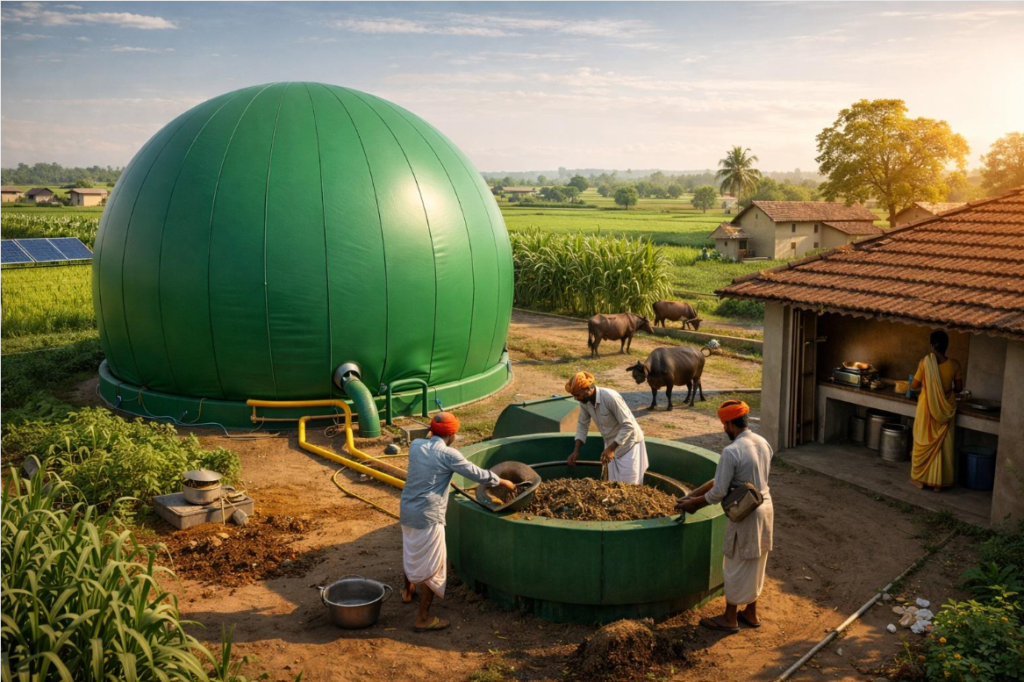
The Rural Bio-Resource Utilization & Bio-Energy Generation Project is a practical, village-level concept that integrates cattle dung-based biogas production, organic manure recovery and agricultural biomass pellet manufacturing into a sustainable rural enterprise.
The initiative promotes a circular resource utilization model in which agricultural residues and livestock waste are converted into valuable products, supporting farmers, rural entrepreneurs and environmental sustainability.
Understanding the Concept – From Farm Waste to Valuable Resources
What Is a Village Bio-Resource Utilization Project?
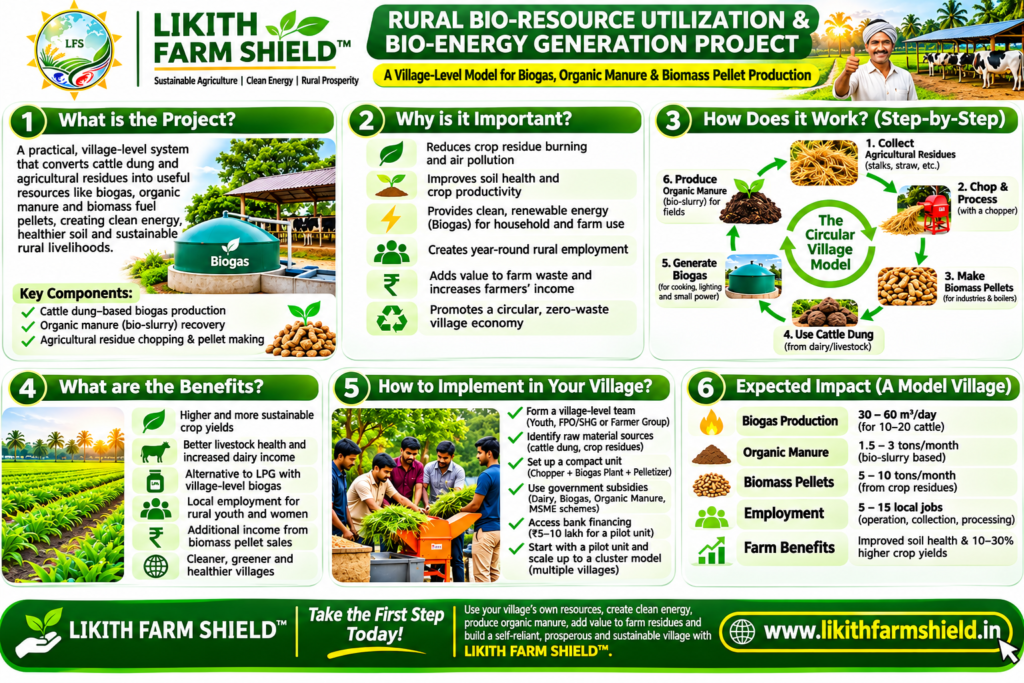
A village bio-resource utilization project is an integrated system that converts locally available agricultural and livestock resources into useful products instead of treating them as waste.
The concept combines three major activities:
- Biogas Generation: Converting cattle dung into renewable biogas through anaerobic digestion.
- Organic Manure Production: Processing biogas slurry and suitable organic materials into nutrient-rich manure and compost.
- Biomass Pellet Manufacturing: Converting suitable surplus agricultural residues into compact biomass fuel pellets for industrial and commercial applications.
The objective is to establish a decentralized resource utilization system that can operate at village, farmer-group or rural-enterprise level.
Why Is This Model Important?
- Reduces the practice of burning agricultural residues.
- Generates renewable energy from locally available resources.
- Converts organic waste into valuable soil nutrients.
- Creates additional income opportunities for farmers.
- Promotes village-level entrepreneurship and employment.
- Encourages responsible resource management and environmental protection.
The fundamental principle is simple: Every suitable agricultural resource can create value when it is properly collected, processed and utilized.
Identifying Village Resources – What Can We Utilize?
The success of a bio-resource project begins with identifying the resources available within the village and surrounding agricultural areas.
A. Cattle Dung and Livestock Waste
Cattle dung is one of the most valuable organic resources available in rural India.
It can be utilized for:
- Biogas production.
- Organic manure and compost preparation.
- Soil fertility improvement.
- Nutrient recycling within agricultural systems.
Livestock-based biogas systems can help convert daily cattle dung into renewable energy while recovering useful nutrients through digestate processing.
B. Agricultural Crop Residues
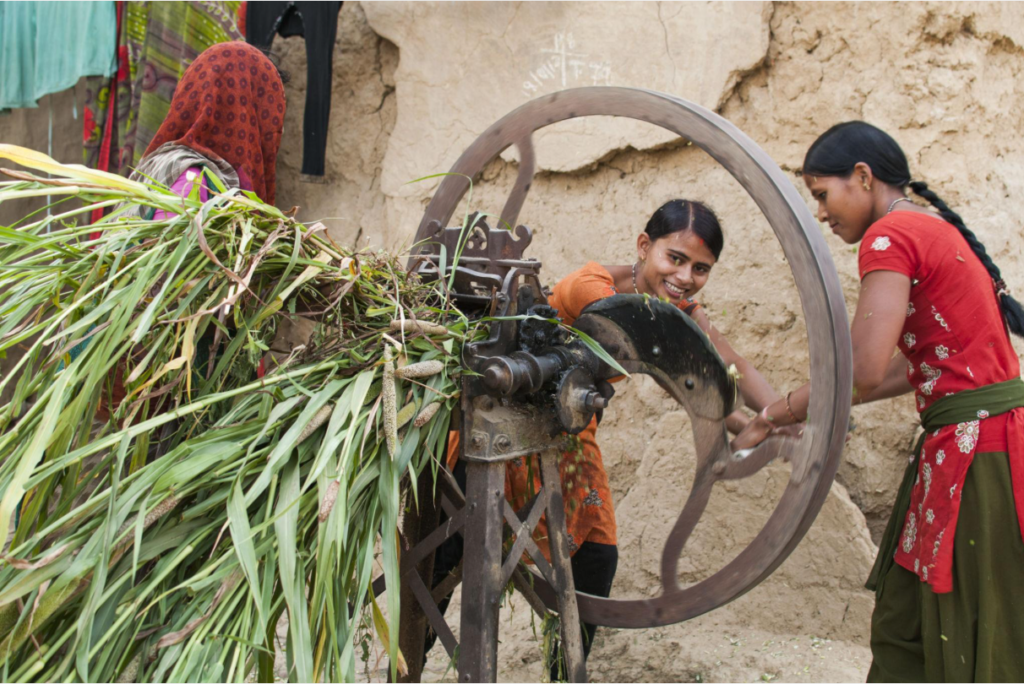
Different crops generate different types of agricultural residues after harvesting.
Examples include:
- Paddy straw and rice residues.
- Cotton stalks.
- Chilli stalks.
- Maize stalks and cobs.
- Groundnut haulms and shells.
- Sugarcane trash.
- Other suitable dry agricultural biomass.
These residues can be directed towards appropriate utilization pathways depending on their availability, moisture content, quality and local requirements.
C. Fodder and Soil Resource Management
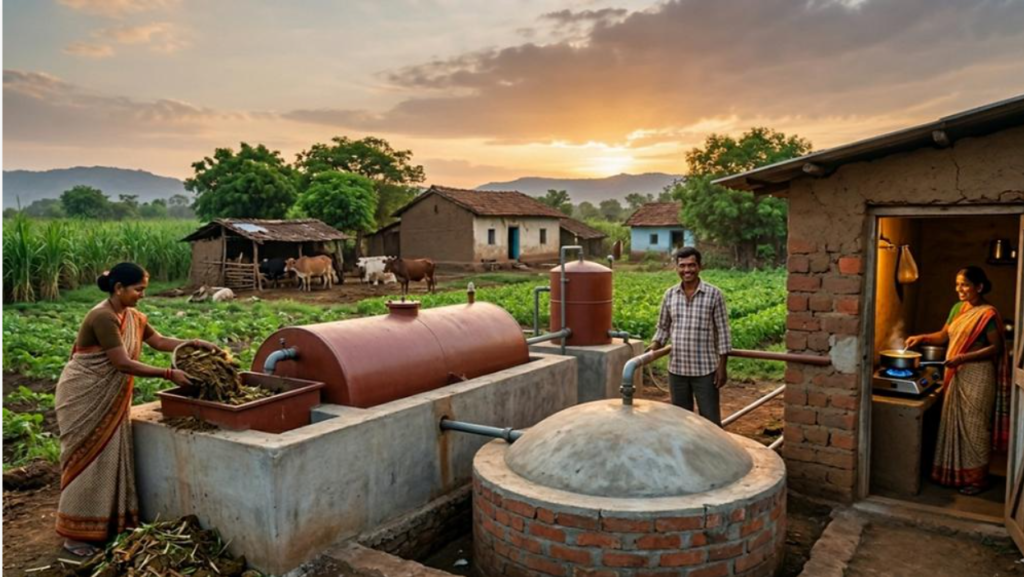
Not all crop residues should be removed from agricultural fields.
Some residues are important for:
- Maintaining soil organic matter.
- Protecting soil moisture.
- Reducing soil erosion.
- Supporting soil biological activity.
- Providing fodder for livestock.
Therefore, the project follows a balanced approach:
Soil Protection + Livestock Feed + Organic Recycling + Biomass Energy
Only suitable surplus biomass should be collected for commercial pellet production after considering soil health and livestock requirements.
How the System Works – The Integrated Bio-Resource Process
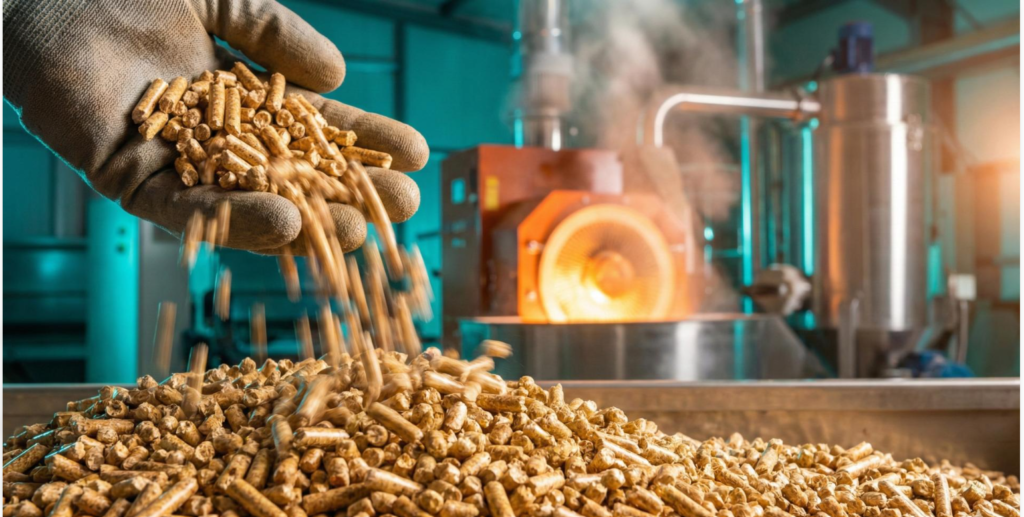
The project connects agricultural production, livestock management, renewable energy and organic manure recovery into one resource cycle.
Step 1: Agricultural Residue Collection and Processing
After harvesting, suitable surplus crop residues are collected from agricultural fields.
The materials are:
- Segregated according to type and quality.
- Dried where necessary.
- Chopped or shredded into suitable sizes.
- Prepared for further utilization.
Depending on their characteristics, residues can be used for fodder, soil management, composting or biomass fuel production.
Step 2: Biomass Pellet Production
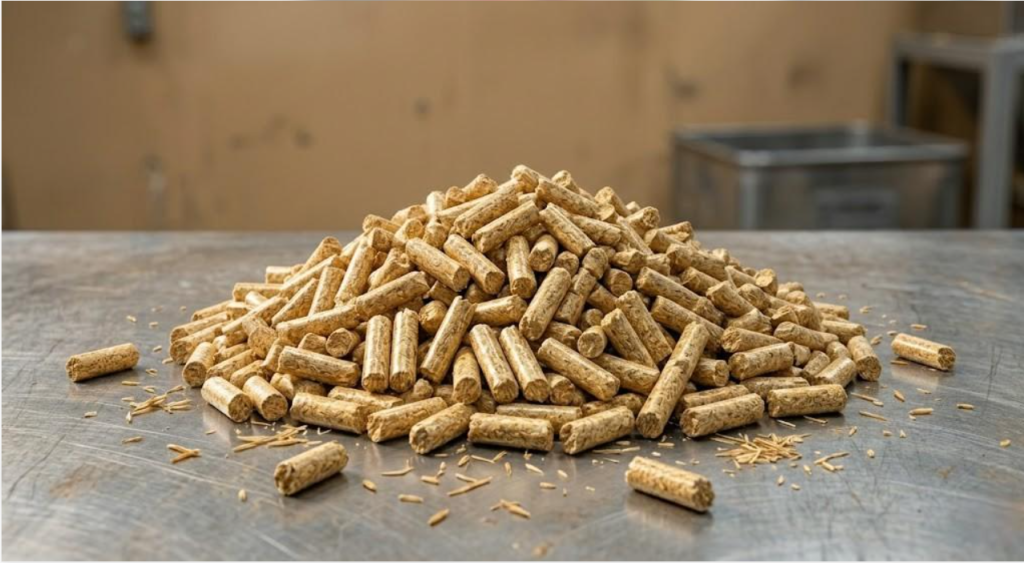
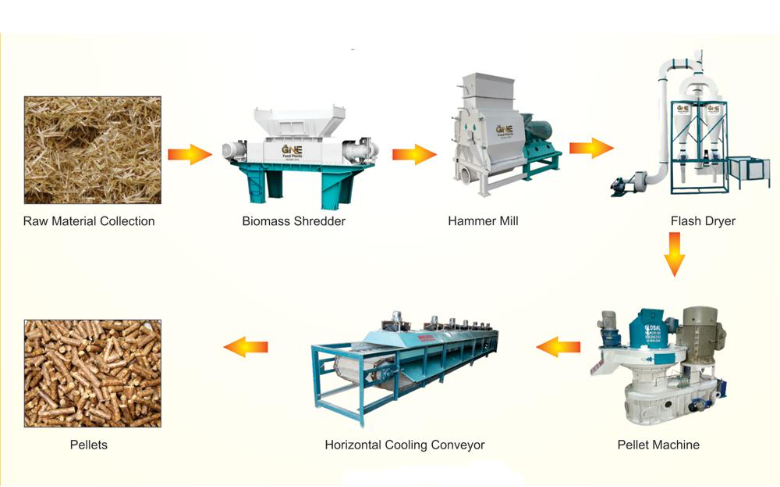
Suitable dry agricultural residues can be processed into biomass pellets using appropriate machinery.
The basic production process includes:
- Collection of suitable agricultural residues.
- Shredding and size reduction.
- Drying, if required.
- Biomass grinding and preparation.
- Pelletization using a suitable pellet machine.
- Cooling, screening and storage.
- Packaging and transportation to customers.
Biomass pellets can be marketed to suitable industrial users, boilers and commercial heating applications, subject to fuel quality and customer requirements.
Step 3: Cattle Dung-Based Biogas Production
Cattle dung collected from dairy farms and livestock units can be mixed with water and fed into a properly designed biogas digester.
Inside the digester, microorganisms break down organic matter in the absence of oxygen and generate biogas.
The produced biogas can be utilized for:
- Cooking applications.
- Dairy and farm energy requirements.
- Suitable thermal applications.
- Small-enterprise energy needs.
Biogas composition, production capacity and utilization depend on feedstock quality, digester design, operating conditions and maintenance.
Step 4: Organic Manure Recovery
The material remaining after anaerobic digestion is called digestate or biogas slurry.
With suitable handling, separation, stabilization and composting processes, this material can be utilized as an organic manure resource.
Potential applications include:
- Agricultural soil nutrient management.
- Compost preparation.
- Organic matter recycling.
- Soil fertility improvement.
- Supporting sustainable crop production.
Proper nutrient analysis, hygienic handling and quality management are important before commercial distribution.
Step 5: Returning Nutrients to Agriculture
Organic manure and suitable compost can be returned to agricultural fields.
This creates a resource cycle in which agricultural production generates residues, livestock utilizes suitable feed materials, biogas provides renewable energy and manure supports soil nutrient management.
The result is a practical circular bio-resource economy at village level.
Key Benefits – Farmers, Rural Communities & Environment
The integrated bio-resource model offers multiple benefits when implemented with appropriate planning and resource management.
1. Improved Soil Health
Organic manure and compost can support soil health by contributing organic matter and nutrients.
Potential benefits include:
- Improved soil structure.
- Better soil moisture retention.
- Support for beneficial soil organisms.
- Improved nutrient recycling.
- Long-term agricultural sustainability.
The actual benefits depend on manure quality, soil conditions, crop requirements and appropriate application practices.
2. Additional Income for Farmers
Agricultural residues that have commercial value can become an additional source of income.
Farmers may benefit through:
- Sale of suitable surplus biomass.
- Participation in residue collection activities.
- Livestock-based enterprise development.
- Organic manure production and distribution.
- Participation in farmer producer groups or village enterprises.
3. Rural Employment Generation
The project creates opportunities for village-level employment and entrepreneurship.
Potential activities include:
- Agricultural residue collection.
- Biomass chopping and processing.
- Pellet machine operation.
- Dairy and livestock management.
- Biogas plant operation and maintenance.
- Organic manure processing.
- Packaging, transportation and marketing.
Rural youth, women, farmer groups and local entrepreneurs can participate in suitable activities based on their skills and training.
4. Renewable Energy Generation
Biogas offers an opportunity to generate renewable energy from cattle dung and other suitable biodegradable feedstocks.
It can help meet selected energy requirements of households, dairy operations and small enterprises when designed and operated appropriately.
5. Environmental Protection
The project supports environmental sustainability through:
- Reducing open burning of suitable agricultural residues.
- Improving organic waste utilization.
- Promoting renewable energy.
- Supporting nutrient recycling.
- Reducing avoidable waste.
- Encouraging responsible agricultural resource management.
6. Development of Village Enterprises
The model encourages the development of decentralized rural businesses instead of depending entirely on external employment opportunities.
A village can gradually develop its own bio-resource collection, processing, energy and manure enterprises.
How to Establish a Village Bio-Resource Unit
A successful project should begin with practical planning, resource assessment and a manageable pilot unit.
Step 1: Conduct a Village Resource Survey
Identify:
- Number of cattle and dairy households.
- Daily cattle dung availability.
- Major crops cultivated.
- Seasonal agricultural residue availability.
- Quantity of surplus biomass after soil and fodder requirements.
- Available land and processing space.
- Potential customers for biomass pellets and organic manure.
- Interested farmers, youth and women entrepreneurs.
Step 2: Select Suitable Enterprise Units
A village bio-resource initiative may include the following units:
A. Cattle Dung Biogas Unit
- Dung collection and feeding arrangements.
- Biogas digester.
- Gas storage and utilization system.
- Digestate collection and management.
B. Organic Manure Processing Unit
- Digestate handling.
- Composting and stabilization.
- Organic material blending, where appropriate.
- Screening, packaging and storage.
C. Agricultural Biomass Processing Unit
- Residue collection.
- Chopping and shredding.
- Drying and grinding, where required.
- Biomass pellet production.
- Pellet storage and marketing.
These units may be established together or developed in phases according to investment, resource availability and market demand.
Step 3: Start with a Pilot Project
A pilot project allows entrepreneurs to test the concept before expanding into a larger village-level operation.
A practical pilot may begin with:
- A small agricultural residue collection network.
- Basic residue chopping and preprocessing equipment.
- A suitable biogas system for available cattle dung.
- A manure processing and composting arrangement.
- Biomass pellet production through a small suitable machine or an external processing partner.
The pilot should focus on operational learning, product quality, customer demand and financial viability.
Step 4: Develop Farmer and Community Participation
Community participation is essential for successful rural resource utilization.
Possible participation models include:
- Individual farmer enterprises.
- Dairy-based resource groups.
- Farmer Producer Organizations (FPOs).
- Self-Help Groups (SHGs).
- Rural youth entrepreneurship groups.
- Village-level cooperative or private enterprises.
Clear agreements for residue collection, payments, resource ownership and responsibilities help build trust.
Step 5: Explore Financial and Institutional Support
Entrepreneurs may explore eligible government programmes, bank finance, MSME support, dairy development assistance, renewable energy programmes and rural livelihood initiatives.
The availability of assistance depends on the applicable scheme, location, applicant category, project design and current guidelines.
A detailed project report, resource assessment, quotations, market analysis and financial projections are important for seeking institutional support.
The Bigger Vision – Building a Self-Reliant and Prosperous Village
The ultimate objective is not merely to establish a biogas plant or biomass pellet unit.
It is to create a sustainable village ecosystem where agricultural resources are utilized efficiently, local enterprises generate income and communities participate in economic development.
The Circular Village Bio-Economy
The model connects five important activities:
Agriculture → Livestock & Dairy → Biogas → Organic Manure → Biomass Energy & Resource Recycling → Agriculture
Each activity supports the others through resource recovery and value addition.
A Village Can Develop Multiple Income Streams
- Crop cultivation and agricultural services.
- Dairy products such as milk, curd, butter and ghee.
- Biogas utilization and renewable energy services.
- Organic manure and compost production.
- Agricultural biomass collection and processing.
- Biomass pellet manufacturing and marketing.
- Rural transportation, equipment operation and maintenance.
This diversified model can reduce dependence on a single source of income and create opportunities for local business development.
A Vision for Rural Transformation
Imagine a village where:
- Agricultural residues are utilized responsibly instead of being unnecessarily burnt.
- Cattle dung becomes a source of renewable energy.
- Organic manure supports soil health and nutrient recycling.
- Biomass becomes a marketable energy product.
- Rural youth and women participate in productive enterprises.
- Farmers receive additional value from available resources.
- Local businesses support employment and economic growth.
This is the vision of a Circular Rural Bio-Economy — a system that combines agriculture, renewable energy, environmental protection and rural entrepreneurship.
From Farm Waste to Rural Wealth
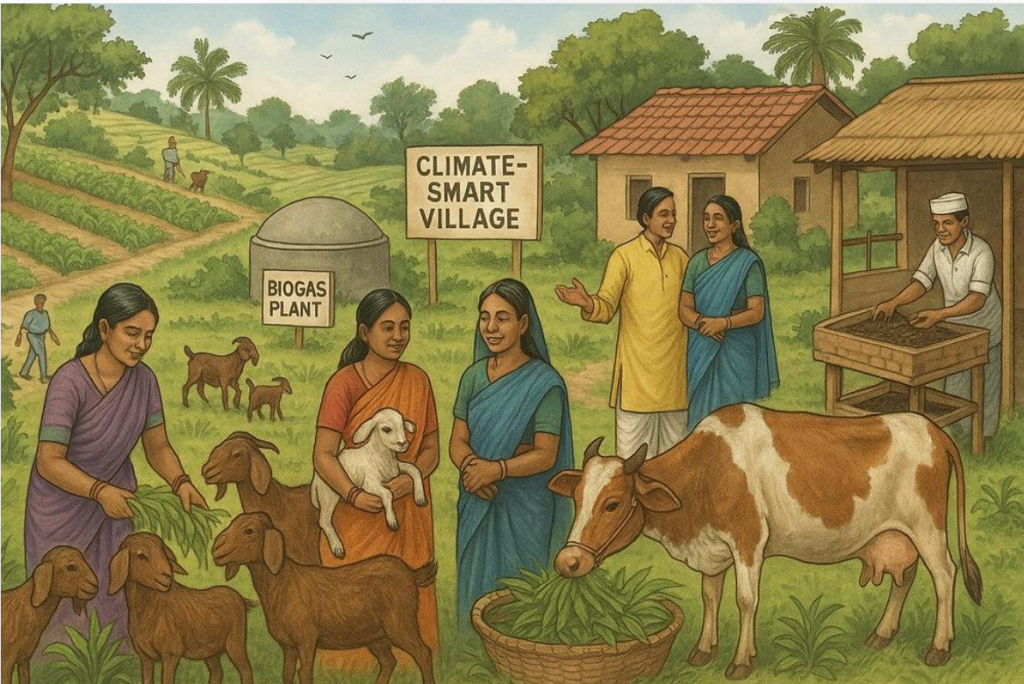
The Rural Bio-Resource Utilization & Bio-Energy Generation Project represents an opportunity to transform agricultural residues and livestock waste into valuable resources.
By integrating biogas production, organic manure recovery and agricultural biomass pellet manufacturing, villages can explore new pathways for renewable energy, sustainable agriculture, resource conservation and rural employment.
The concept is scalable and adaptable. It can begin with a small pilot initiative and gradually expand according to local resources, technical feasibility, market demand and community participation.
LIKITH FARM SHIELD™ – Our Commitment
Promoting Sustainable Agriculture • Renewable Energy • Soil Health • Rural Entrepreneurship
Our vision is to encourage practical, science-based and environmentally responsible solutions that empower farmers, strengthen rural enterprises and contribute to a healthier and more prosperous future.
Let us turn agricultural resources into opportunities — and build a sustainable future from our villages.
Important Note: This article is an educational project concept. Actual implementation requires local resource assessment, technical design, safety compliance, market validation and financial feasibility evaluation. Crop residues should be removed only after considering soil health, fodder needs and sustainable residue management practices.